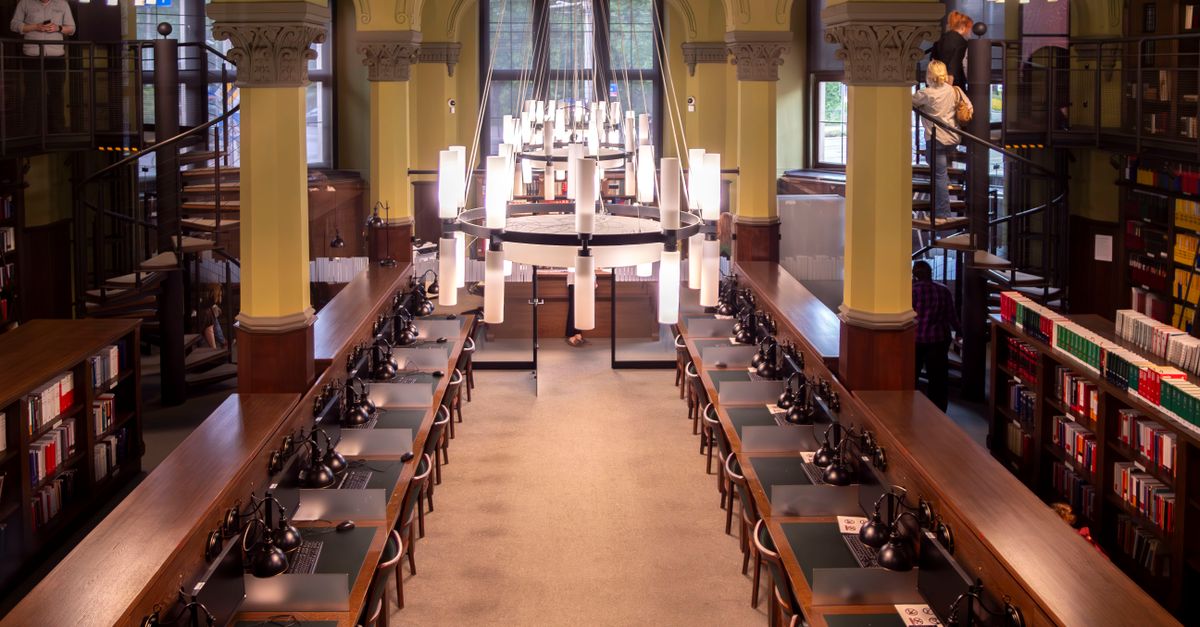
Why Is McKinney Spending $20 Million on a Library?
At 101 E. Hunt St., the Roy and Helen Hall Memorial Library has long been a fixture of civic life in McKinney. For many longtime residents, it is simply the library — the building you visited for school projects, the one your parents took you to on Saturday mornings. But the structure that has served the community for decades is now closed to the public while a $20 million renovation reshapes it from the inside out.
The investment is notable on its own terms. Twenty million dollars is a significant allocation for a single municipal building, and it signals something about how McKinney’s leadership and residents understand the role of a public library in a city that has been growing as fast as this one has. The question worth asking is not just what the money buys, but why the community decided now was the time.
What Will Actually Be Different When It Reopens?
The most discussed addition is a planetarium. For a city library, that is an unusual feature, and it sets the renovated Roy and Helen Hall Memorial Library apart from the typical branch-upgrade story. A planetarium embedded in a public library creates a specific kind of opportunity: it connects the library’s core mission of education and curiosity with a hands-on, immersive experience that is difficult to replicate at home or in a standard classroom.
Beyond the planetarium, the renovation will add new gathering spaces. The phrase covers a range of possibilities — meeting rooms, collaborative work areas, flexible event space — but the underlying intention is the same. Modern library design has moved steadily away from the model of silent stacks and individual carrels toward spaces that can accommodate programming, community meetings, tutoring sessions, and the kind of informal gathering that helps a neighborhood cohere. McKinney’s investment in new gathering spaces reflects that shift.
The full scope of upgrades is described as including other improvements beyond those two headline items, though the planetarium and gathering spaces are the features that have drawn the most attention. The project is expected to be completed by 2026, meaning the community is now in the final stretch of what has been a meaningful period of absence from a beloved building.
How Is the Community Managing Without It?
A library closure of this length tests a community’s institutional flexibility. McKinney’s answer has been practical: holds and returns remain available at two alternate locations, the John and Judy Gay Library and McKinney City Hall. For residents who need to pick up a reserved book or return materials, those options keep the essential functions of the library system running without interruption.
The John and Judy Gay Library, as the other full-service branch in the McKinney system, absorbs much of the demand that would otherwise go to the Hunt Street building. That kind of redundancy in a library system — having more than one location capable of handling the community’s needs — is precisely what makes a major renovation feasible without cutting residents off from library services entirely.
Still, there is no direct substitute for a neighborhood library in its usual location. The Roy and Helen Hall Memorial Library sits in a part of McKinney where its presence is woven into the daily rhythms of nearby streets. Its absence, even a temporary one, is felt. The alternative locations help, but they also underscore what residents stand to regain when the renovation is complete.
What Does This Project Reveal About McKinney’s Priorities?
City governments make choices about where capital dollars go, and those choices reflect values even when they are not framed that way. A $20 million commitment to a public library — not a revenue-generating facility, not infrastructure in the conventional sense — is a statement about what kind of city McKinney intends to be as it grows.
McKinney has added population rapidly over the past two decades, and that growth brings pressure to prioritize roads, utilities, and the basic mechanics of a functioning city. Against that backdrop, the decision to invest heavily in a library that will include a planetarium and expanded community gathering space suggests a deliberate effort to build civic amenities that serve residents across income levels and age groups equally. A library, unlike many other municipal investments, belongs to everyone who walks through the door.
The planetarium element is worth dwelling on specifically in the McKinney context. The city has a strong school system and a community that places considerable emphasis on educational outcomes. Adding a planetarium to the central public library creates a resource that can support McKinney ISD school programming, spark interest in science and astronomy among younger residents, and give families something to do together that is both free and genuinely enriching. In a metro area where many of the most compelling educational attractions require a drive to Dallas or Fort Worth, having that kind of resource on Hunt Street is locally meaningful in a way it would not be everywhere.
What Happens After the Ribbon Is Cut?
The completion of a renovation is only the beginning of a building’s next chapter. The Roy and Helen Hall Memorial Library will reopen to a McKinney that is larger and in some ways different from the one it served before construction began. Whether the new spaces are used to their potential depends on programming decisions, community outreach, and the degree to which residents feel ownership over the building.
Libraries that add gathering spaces without filling them with consistent, relevant programming tend to find those spaces underused. The opportunity in McKinney is to pair the physical investment with an equally thoughtful investment in what happens inside the building on any given Tuesday afternoon — the classes, the community meetings, the events that make a library more than a place to borrow books.
The planetarium presents a similar programming question. A planetarium that runs shows on a predictable schedule, partners with McKinney ISD, and integrates with the library’s existing collections on space and science will deliver far more value than one that operates sporadically. The hardware is the easier part. Building the habits and relationships that make people return is the longer work.
For now, McKinney waits. The John and Judy Gay Library handles the daily needs. City Hall accepts the returns. And on Hunt Street, the building that has carried the Hall name for years is being remade into something the community has not yet seen. When it opens, it will be worth the trip.