Why Does a Saturday Morning Market Keep Drawing Crowds
There is something deliberate about a farmers market that runs from 8 a.m. to noon. It asks residents to plan, to rise early, to carve out time before the week’s momentum builds. At the McKinney Farmers Market at Chestnut Square, that rhythm has become a fixture of community life, running every Saturday through December on Chestnut Street at Chestnut Square Heritage Village.
For a city that has grown as rapidly as McKinney, the market offers something counterintuitive: a slow, open-air pause. It is also, by its location alone, layered with civic meaning.
What Makes Chestnut Square More Than a Backdrop
Chestnut Square Heritage Village is not an incidental setting. It is one of McKinney’s more intentional acts of historical preservation — a collection of restored nineteenth-century structures that tell the story of Collin County’s early settlement. Hosting a weekly farmers market there places the contemporary act of buying locally grown tomatoes or handcrafted soap directly inside a space dedicated to honoring how this community once lived and worked.
That layering is not accidental. Farmers markets, at their functional core, recreate a commercial and social pattern that predates supermarkets, supply chains, and e-commerce. Holding one at a heritage village is a quiet argument that some things are worth maintaining across generations.
The market runs 8 a.m. to noon, a window that favors the intentional shopper over the casual one. By the time most weekend errands begin, the best seasonal produce has often already changed hands.
Who Is Actually Showing Up — and Why It Matters
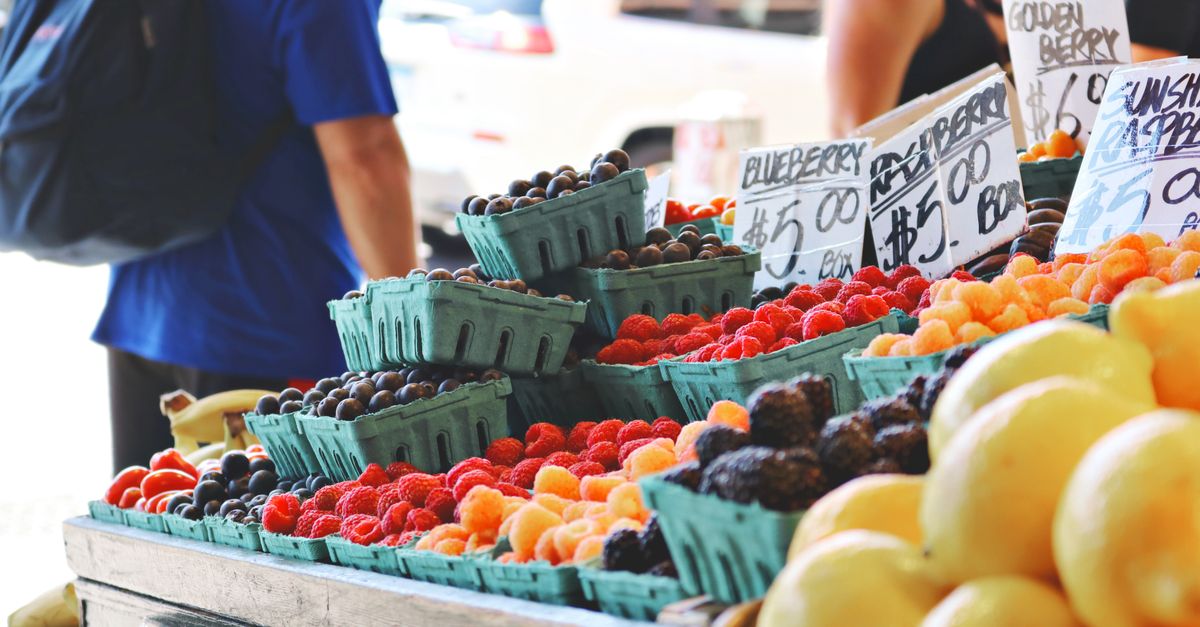
The market connects shoppers directly with local farmers and vendors offering fresh produce and artisanal goods. That phrase — local farmers and vendors — carries economic weight that aggregate grocery statistics tend to obscure.
When a McKinney resident buys a basket of peaches or a jar of honey at Chestnut Square rather than at a regional chain store, the transaction stays closer to home. The producer receives a higher margin. The buyer receives traceability: they can ask where the crop was grown, how it was treated, whether a particular variety will return next week. That kind of direct exchange is structurally different from conventional retail, and it tends to build the kind of trust that brings the same customers back across multiple seasons.
For vendors, the Saturday schedule through December provides a predictable, recurring sales channel — not a one-off pop-up but a committed calendar. That consistency is significant for small-scale agricultural producers and artisan makers whose businesses depend on reliable access to buyers.
How the Market Fits Into McKinney’s Broader Summer Calendar
The Chestnut Square market does not exist in isolation. McKinney’s summer and fall calendar includes several other recurring market-and-vendor events — Friday evenings at TUPPS Brewery and the first-Friday outdoor market at District 121 among them. Each draws a different crowd at a different hour, and together they suggest a city with enough appetite for local commerce to sustain multiple formats simultaneously.
What distinguishes the Chestnut Square market is its timing and its setting. Morning markets attract families with young children, older residents who prefer cooler temperatures, and serious home cooks planning the week’s meals. The heritage village location draws people who may linger — who walk the grounds, read the interpretive signage, or bring visitors from out of town who want to see a piece of McKinney that existed before the highway exits and the retail corridors.
The market also arrives on the calendar at a moment when McKinney’s summer programming is notably full. Collin College is running camps through early August. The McKinney Public Library’s weekly STEAM storytimes continue at the John and Judy Gay Library branch. The McKinney Performing Arts Center maintains its summer season in historic downtown. A Saturday morning market fits naturally into that wider pattern of residents actively using community infrastructure.
What the Weekly Structure Actually Demands
Running a market every Saturday from spring through December is operationally demanding. Vendors must commit to repeated appearances. Organizers must maintain quality standards, manage logistics, and adapt to weather. Shoppers must form the habit.
Habit formation is perhaps the least discussed but most important element of a successful recurring market. A market that draws strong attendance in peak summer weeks but thins out by October has not fully succeeded. The fact that the Chestnut Square market runs through December suggests it has built the kind of loyal shopper base that persists when the novelty has worn off and the mornings have turned cold.
For residents considering whether to make it part of their weekend routine, the practical calculus is straightforward. The market opens at 8 a.m. — early enough that the drive to Chestnut Street requires minimal traffic navigation — and wraps by noon. It is accessible by foot or bike for residents in older McKinney neighborhoods. Parking near the heritage village is available for those coming from farther out.
What This Market Signals About McKinney’s Appetite for Community Anchors
McKinney’s growth over the past two decades has been relentless by almost any measure. New subdivisions, retail development, and infrastructure projects have reshaped large portions of the city’s geography. In that context, recurring community gatherings anchored to specific, historic places serve a function beyond commerce or entertainment.
They give residents a reason to return to the same spot on the same morning week after week. They create the kind of low-stakes, repeated social contact — a familiar vendor, a neighbor encountered by chance, a child who remembers the honey from the previous week — that researchers who study urban belonging identify as foundational to civic cohesion.
Chestnut Square Heritage Village, with its preserved structures and its Saturday market, represents one of McKinney’s more durable bets on that kind of place-based continuity. The market runs through December. That leaves many Saturday mornings still ahead.