The Corner of Fresh Bread and Picture Books
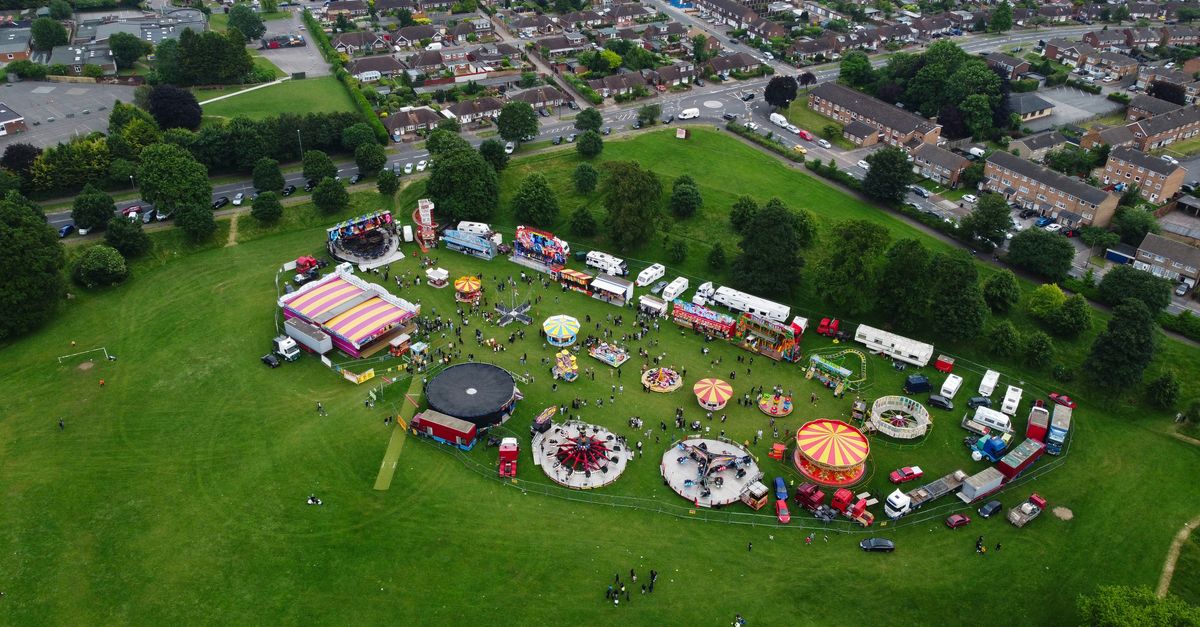
By 7:45 on a Saturday morning, the old Heritage Village grounds at 315 S. Chestnut Street are already stirring. A vendor unrolls a canvas awning. Someone sets out a hand-lettered sign beside jars of local honey. A toddler in rubber boots peers through a wrought-iron fence at the activity building, asking questions her parents cannot quite answer fast enough.
This is the corner where McKinney’s weekend quietly organizes itself — a place where the smell of just-picked produce mingles with the low hum of neighbors catching up across folding tables. The McKinney Farmers Market has run every Saturday from 8:00 a.m. to noon throughout June 2026, and it has done so on the same historic ground that has anchored community life in this city for generations. But this year, a small addition to the morning lineup has made Saturday at the market something families are building their weekends around.
The McKinney Public Library has brought storytime to the market.
A Program That Travels to Where Families Already Are
Library outreach programs often ask people to come to them. This one works the other way. Each Saturday in June, library staff show up at the farmers market — at the Old Settlers Recreation Center location tied to the market footprint — and offer storytime programming open to all ages, free of charge, no registration required.
The logic is straightforward, and it turns out to be rather elegant in practice. Families are already there. Parents are navigating strollers between vendor tables, handing a child a strawberry, scanning labels, running into a neighbor. The storytime slot gives the morning an extra reason to linger, and it gives children a moment of structured magic in the middle of what is otherwise an adult errand.
For the McKinney Public Library, showing up at the farmers market is consistent with how many public libraries across Texas have been rethinking their footprint — understanding that the library’s mission extends well beyond the walls of any single building. Bringing books and readers together at a community gathering point reinforces something librarians have argued for years: literacy and community are not separate investments.
What the Market Itself Offers
The farmers market at Chestnut Square is one of those civic institutions that looks modest until you spend a few Saturdays there and start to understand its texture. Local farmers and producers bring fresh vegetables, fruit, eggs, and a rotating selection of artisanal goods. The vendor mix shifts with the season, but the continuity of familiar faces is part of what keeps people coming back.
The location matters, too. The Chestnut Square Historic Village at 315 S. Chestnut Street is not a generic outdoor shopping plaza. The grounds hold some of the oldest preserved structures in McKinney — buildings that have been restored and maintained by a nonprofit committed to keeping local history tangible rather than archived. Shopping for tomatoes a few feet from a 19th-century farmhouse creates a particular kind of morning, one that is harder to replicate in a parking lot.
That physical rootedness in place is something McKinney has worked deliberately to preserve. The historic square and its surrounding blocks represent one of the more visible arguments the city makes for what distinguishes it from the broader sprawl of the Metroplex. The farmers market, running here every Saturday, is a weekly demonstration of that argument.
The Rhythm of a McKinney Saturday in June
For families mapping out their June weekends, the combination of storytime and market creates a natural arc for a Saturday morning. Arrive around eight, when the light is still soft and the crowds manageable. Let a child pick out something from a vendor — a peach, a small bunch of radishes, something they will be more likely to eat because they chose it themselves. Find a spot for storytime when it begins. Walk the grounds. Be home before noon, with a bag of local produce and a child who has had a richer morning than a screen could provide.
That kind of morning is not complicated to engineer, which is probably why the combination has resonated. McKinney’s population has grown considerably over the past decade, and with that growth has come the recurring civic question of how a city maintains the qualities that made it appealing in the first place. Programs that bring institutions — the library, the market, the historic village — into contact with each other are one answer to that question. They create shared mornings.
Why It Matters Beyond the Moment
There is a longer argument embedded in something as simple as a librarian reading a picture book beside a produce stand. It has to do with what a city decides to invest in, and what kinds of experiences it makes easy for its residents to access.
McKinney has been growing fast enough that the term “community” can sometimes feel aspirational rather than descriptive. Neighborhoods fill in, traffic patterns shift, familiar businesses turn over. What holds a place together across those changes is often less visible than a new development: it is the Saturday morning ritual, the familiar vendor, the volunteer who shows up every week to read to whoever sits down.
The farmers market storytime does not solve anything on its own. But it represents a considered choice to make Saturday mornings in McKinney worth showing up for, to give families a reason to be in the same outdoor space at the same time, and to give children an early association between their city and the pleasure of a story told well.
The market runs through the end of June, every Saturday from 8:00 a.m. to noon at 315 S. Chestnut Street. The library storytime is there on those same mornings, free, for any child who wanders over. It is a small thing, and it is also, in the way that small things sometimes are, exactly the point.