The Corner Where McKinney Makes Things
By a little before six on a Friday evening, the temperature in McKinney has not yet surrendered to anything approaching comfortable, but that does not seem to matter much to the people already setting up tables at TUPPS Brewery. Canopies go up. Coolers get positioned. A vendor arranges handmade goods with the particular care of someone who built each one herself. The week, for a certain slice of this city, does not end at a desk or a clock — it ends here, at Hops and Shops.
The event is free. It runs from six to nine on Friday evenings, and what it offers is deceptively simple: local vendors, cold beer, and the kind of unhurried social atmosphere that McKinney’s growth has made harder to find even as demand for it keeps climbing. The next edition falls on July 24, and for anyone who has not yet wandered through on a summer evening, it represents something worth understanding — not just as an outing, but as a small and deliberate piece of how this city is choosing to grow.
What Hops and Shops Actually Is
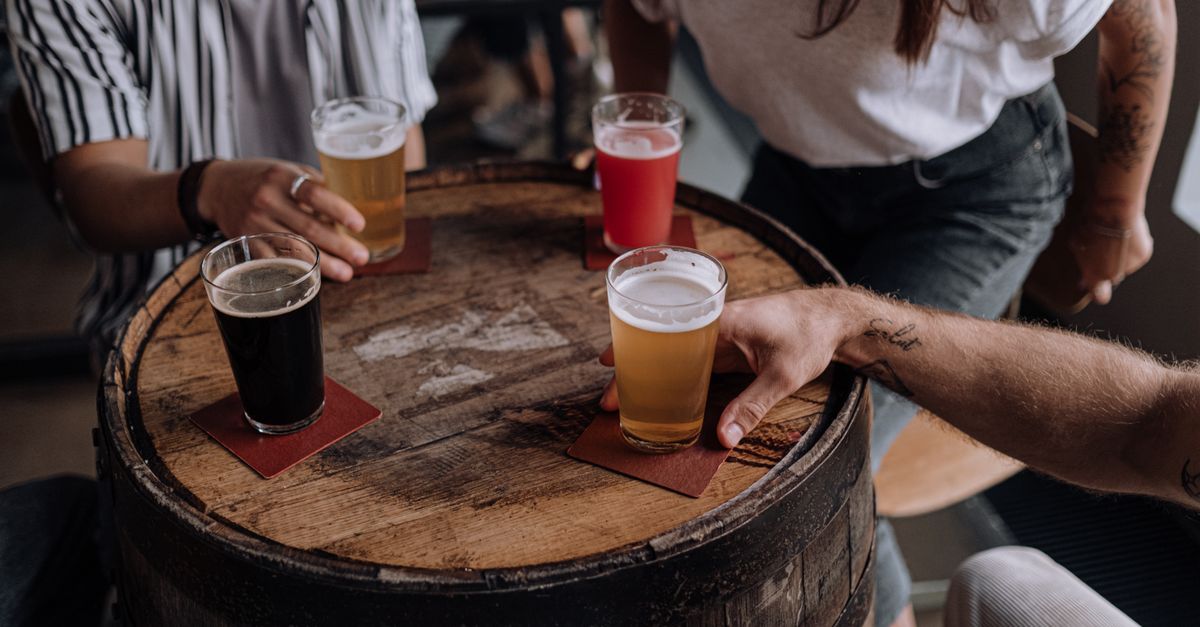
Strip away the marketing language around events like this one and what remains is a market. Local makers bring what they have made. People browse. Some buy, some just look, most stay longer than they planned. A brewery provides the backdrop and the beverages, and the combination turns a commercial space into something that feels, at least for three hours on a Friday, like a town square.
That is not an accident of atmosphere. It is a function of format. TUPPS Brewery has built Hops and Shops as a recurring event rather than a one-time occasion, which means vendors can plan around it, regulars can expect it, and the gathering accumulates a kind of social memory that single-night pop-ups rarely develop. Faces become familiar. Vendors learn which of their items sell better on hot evenings. Customers start arriving with specific makers in mind.
For McKinney, a city that has added residents at a pace that sometimes outstrips the infrastructure of community, events with that kind of continuity carry real weight. There is a difference between a city that hosts events and a city where events have become part of the rhythm of life. Hops and Shops, by showing up every Friday, is working toward the latter.
The Vendor Economy Behind the Tables
The people staffing those tables represent a cross-section of McKinney’s maker economy — the part that does not show up in office park announcements or ribbon-cutting ceremonies but that gives a place its texture. Artisans, small-batch food producers, crafters, and independent designers all cycle through events like this one, and for many of them, a recurring Friday-night market is not a hobby. It is a revenue stream, a customer-acquisition channel, and a way of testing what the community actually wants.
Collin County has seen significant growth in small business formation over the past several years, and McKinney’s downtown corridor has become one of the more active testing grounds for independent retail and food concepts. Events like Hops and Shops function as low-friction entry points into that ecosystem. A vendor does not need a lease or a storefront to find out whether McKinney residents will pay for what she makes. She needs a canopy, a table, and a Friday evening.
That accessibility matters especially for makers who are still figuring out scale. The brewpub setting also filters the audience in a useful way — people who show up to a Friday evening market at a brewery are generally disposed toward spending, toward conversation, and toward the idea that local goods are worth seeking out. It is a self-selecting crowd in the best possible sense.
Where This Fits in McKinney’s Summer
Hops and Shops on July 24 arrives in the middle of a summer that has given McKinney residents an unusual number of options for free, outdoor, community-rooted evenings. District 121 holds its own First Friday Market and Music event on August 1, running from seven to ten in the evening with live music alongside vendors. The formats are similar enough to be complementary and different enough to attract their own regulars.
What this summer’s calendar reflects, taken together, is a city that has become deliberate about programming the spaces between its major anchors. McKinney has a historic downtown, a performing arts center, libraries, parks — the bones of civic life are well established. What recurring evening events like Hops and Shops add is connective tissue: the informal, low-stakes gatherings where people encounter each other outside of any particular errand or obligation.
Visit McKinney has also been active this summer in curating a Summer of Soccer series tied to the 2026 FIFA World Cup season, reflecting a broader effort to channel the city’s population diversity into shared public experiences. The logic is similar: find the moments when people are already inclined to gather and build something around them.
Why a Brewery, and Why It Works
There is an argument to be made that the brewery is the ideal host for this kind of event, and it goes beyond the obvious appeal of cold beer on a July evening in North Texas. Breweries occupy a particular social position in American cities right now — they are commercial spaces that have learned to behave like community spaces, offering programming, hosting events, and building loyalty through something more durable than product alone.
TUPPS has leaned into that role in McKinney. A Friday evening market is not, on its surface, a core business activity for a brewery. It does not require the brewery to be in the beer business so much as it requires the brewery to be in the place-making business. The vendors draw foot traffic. The foot traffic becomes customers. The customers associate the brewery with the pleasure of a Friday evening well spent. The cycle is mutually reinforcing, and the community ends up with something it did not have to fund or organize from the top down.
That model — private venue, public benefit, open door — is one that McKinney has been good at cultivating. It shows up in the way the Cotton Mill has become an arts anchor, in the way Chestnut Square hosts the weekly farmers market, in the way the performing arts center has continued drawing audiences through its summer programming. The city’s character is being written, in part, by the businesses willing to hold the door open on a Friday night.
The Simple Case for Showing Up
For a McKinney resident trying to decide how to spend a July evening, the calculation for Hops and Shops on July 24 is not complicated. The event is free. The hours — six to nine — are manageable even on a night when the heat has not fully relented by sunset. Local vendors will have things worth looking at, and a fair number of them will have things worth buying. The brewery will have beer.
But the stronger case for showing up is the one that does not fit neatly into an event listing. McKinney is a city in the middle of figuring out what kind of place it wants to be as it grows. The answer to that question gets written in small decisions — which events become habits, which spaces become gathering points, which Friday evenings people remember. Hops and Shops is one of those small decisions. Three hours, a canopy, a table, and a community that keeps choosing to show up.